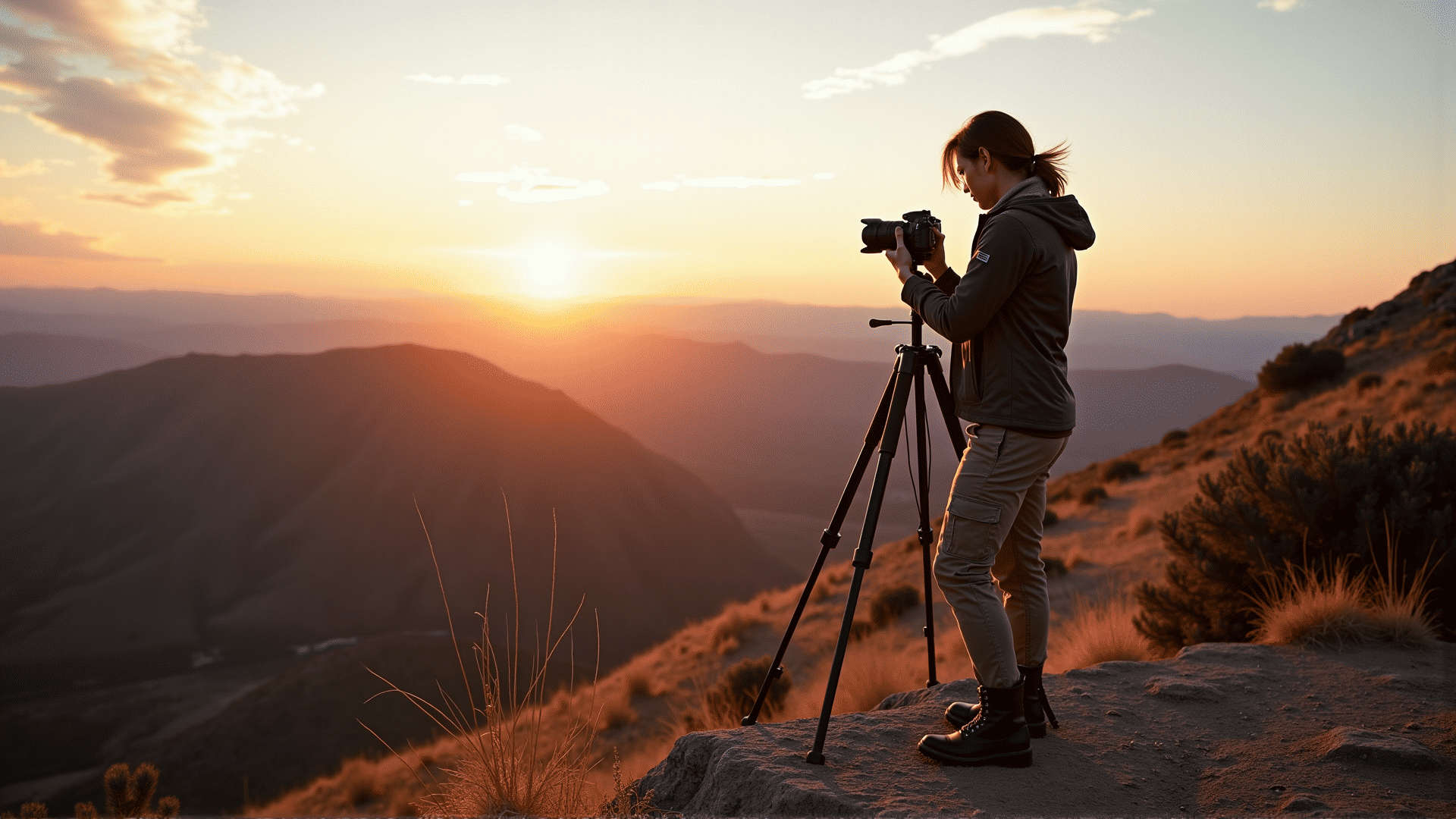
Understanding the art of composition can significantly elevate your photography to a new level. At its core, composition is about arranging elements within your frame to create harmonious and visually appealing images. Here are some essential guidelines and creative ideas to enhance your photographic eye.
The Rule of Thirds
One of the foundational techniques in photographic composition is the rule of thirds. Imagine dividing your frame into a 3x3 grid: two horizontal lines and two vertical lines. The idea is to place your subject along these lines or at their intersections. This technique encourages balanced and naturally pleasing compositions by guiding the viewer’s eye through the image.
Leading Lines
Using leading lines is an effective way to draw attention to your subject. These can be roads, fences, bridges, or even a line of trees that direct the viewer’s gaze towards the focal point of the picture. Experimenting with different angles can further enhance the dynamic nature of your compositions.
Framing
Natural frames like windows, doors, or overhanging branches can add depth and context to your photographs. By positioning your subject within a frame, you create a sense of depth and focus that can transform a simple image into something strikingly impactful.
Symmetry and Patterns
Symmetry offers balance and a sense of harmony, while patterns can add interest and compromise to your shots. Look for repeated shapes, colors, or textures that create a sense of unity within the frame. Breaking a pattern with an anomalous element can also add a focal point for the viewer.
Background and Foreground
Carefully consider the elements both in front of and behind your subject. A cluttered background can distract, while an interesting one can add depth and context. Similarly, incorporating foreground elements can lead the viewer into the scene, adding layers and a three-dimensional feel to your image.
Perspective and Angle
Sometimes all you need to transform an ordinary scene into an extraordinary one is a change in perspective. Experiment with different angles; shooting from ground level or a high vantage point can offer new visual insights. Playing with perspective can create unique compositions that stand out.
Negative Space
Embracing negative space—or the space around your subject—can result in compelling compositions. It can bring emphasis to your subject, adding a sense of simplicity and allowing room for the viewer’s imagination to wander.
Light and Shadow
Light is one of the most powerful tools at a photographer’s disposal. Shadows can add depth and drama, while natural light can enhance mood. Experiment with different times of day and conditions to see how it affects your composition.
Breaking the Rules
While these guidelines provide a helpful starting point, don’t be afraid to break them. The key to mastering composition is knowing when to deviate and create something truly unique. Trust your instincts and allow creativity to guide you.
By incorporating these techniques into your photographic practice, you can begin to see the world in new and exciting ways. Composition is an ongoing journey of discovery and expression, inviting you to explore and refine your style.